How to Choose an IP Desk Phone in 2026: A Practical Buyer’s Guide
Learning how to choose an IP desk phone is one of the smartest moves a growing business can make in 2026. The right SIP handset improves call clarity, cuts monthly line costs, and gives your team features that old analog phones simply cannot match. But with dozens of models on the market, picking the correct IP desk phone for your office can feel overwhelming. This guide walks you through every decision, from screen size and codecs to Power over Ethernet, so you buy once and buy right.
Over the past few years we have set up hundreds of desk phones across small offices, call centres, and hotel receptions. The lessons below come from real deployments, not spec sheets alone. By the end you will know exactly which features matter for your workflow and which ones are marketing fluff.
Why Choosing the Right IP Desk Phone Matters
An IP desk phone is the daily tool your staff touch more than almost any other device. A cramped screen, poor audio, or a confusing menu costs seconds on every call, and those seconds add up across thousands of calls a month. Choosing well the first time protects productivity and your budget.
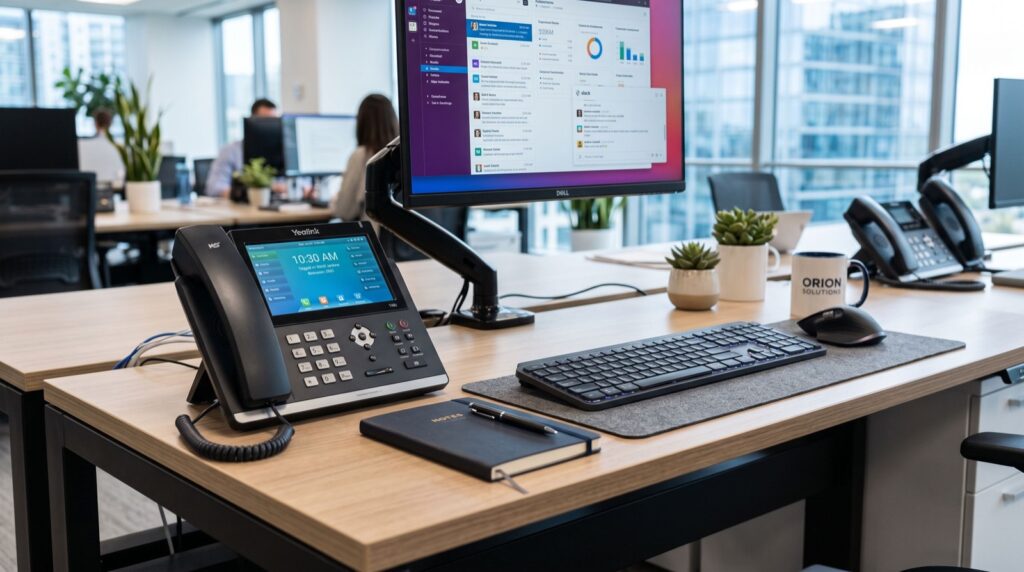
Modern SIP handsets connect over your existing data network, so you avoid separate phone wiring. They also register to a cloud PBX or on-premise system, meaning features like call transfer, voicemail-to-email, and busy lamp fields come standard. When you buy from a trusted supplier and lean on an experienced local team, setup and provisioning become painless.
Key Features to Compare Before You Buy
Not every phone suits every desk. Before comparing brands, list what your users actually do all day. A receptionist juggling twenty lines needs expansion keys; a home worker needs simple, reliable audio. Focus on these core features.
- Display: Colour screens make contact lists and call logs far easier to read. Larger displays suit reception and management desks.
- Line keys and BLF: Programmable keys with busy lamp field show who is on a call at a glance, essential for busy teams.
- Audio codecs: Support for HD wideband G.722 and Opus delivers crisp, natural voice quality.
- Connectivity: Dual Gigabit Ethernet ports let you daisy-chain your PC through the phone, saving a wall socket.
- Power over Ethernet: PoE removes the need for a separate power adapter at every desk.
- Headset and Bluetooth: EHS headset support and Bluetooth matter for staff who talk hands-free all day.
Match the Phone to the Role
Executives and reception staff benefit from a premium handset with a large colour screen and many programmable keys. A model like the Fanvil V61G Prime Business Phone is built exactly for this tier, offering Gigabit ports, a sharp display, and a professional feel that clients notice on video-adjacent calls. For a standard staff desk, a mid-range phone with two to four lines is usually plenty.
SIP Compatibility and Provisioning
The best hardware is useless if it will not register to your phone system. Before buying, confirm the handset speaks standard SIP and is certified with your PBX or VoIP provider. Most quality brands publish compatibility lists for Asterisk, FreePBX, 3CX, and popular hosted platforms.
Provisioning is the second half of the story. Auto-provisioning lets you configure dozens of phones from a central server instead of touching each one by hand. This saves hours on larger rollouts and keeps every device on the same firmware and security policy. Ask your supplier whether the model supports zero-touch provisioning.
IP Desk Phone Comparison Table
| Tier | Best For | Typical Lines | Key Features |
|---|---|---|---|
| Entry | Home office, single-line desks | 1–2 | HD audio, PoE, basic screen |
| Mid-range | General staff desks | 2–6 | Colour display, dual Gigabit, BLF keys |
| Executive | Managers, reception | 6–20 | Large colour screen, Bluetooth, many keys |
| Console | Call centres, operators | 20+ | Expansion modules, headset priority |
Budget, Warranty, and Total Cost of Ownership
The sticker price is only part of the equation. A cheap phone that fails in a year costs more than a durable unit backed by a solid warranty. Factor in PoE support, which removes the recurring cost of power bricks, and firmware updates, which keep the device secure for years.
According to the industry body SIP Forum, standards-based SIP endpoints protect your investment because they interoperate across vendors and survive PBX migrations. Buying certified hardware means you are not locked into a single provider if your needs change in 2026 and beyond.
When you shop from a supplier carrying a full range of IP Phone / IP Phones, you also get local warranty support and quick replacements, which matters far more than saving a few rupees up front.
Practical Tip From the Field
Order one sample phone before a bulk purchase. Register it to your live system, let two staff use it for a week, and gather feedback on the keypad, speaker, and menu. This tiny step has saved our clients from buying fifty of the wrong model more than once.
Deployment Checklist
- Confirm SIP certification with your PBX or hosted provider.
- Verify your switch supplies enough PoE budget for all phones.
- Choose display size and line-key count per role.
- Enable auto-provisioning and set a firmware baseline.
- Test HD codecs on a real call before rollout.
- Label extensions and document the dial plan.
Frequently Asked Questions
How do I choose an IP desk phone for a small office?
Start with the number of lines each user needs, then confirm SIP compatibility with your system. For most small offices a mid-range colour-screen phone with PoE and two to four line keys is the sweet spot for price and features.
Do IP desk phones need a special power supply?
Not if your network switch supports Power over Ethernet. PoE delivers both data and power over one cable, so you can skip the wall adapter. If your switch lacks PoE, you can add a PoE injector or buy the optional adapter.
Can I use any SIP phone with any VoIP provider?
Generally yes, as long as the phone follows the open SIP standard and your provider allows BYOD handsets. Always check the provider’s certified device list first to avoid registration and audio issues.
Is a colour screen worth the extra cost?
For reception, management, and anyone using contact directories or call logs heavily, a colour screen improves speed and reduces errors. For a simple single-line desk, a basic display is fine.
Final Thoughts
Choosing an IP desk phone in 2026 comes down to matching features to roles, confirming SIP compatibility, and buying durable hardware from a supplier who supports you after the sale. Prioritise HD audio, PoE, and the right number of line keys, then test before you scale. Get these basics right and your new phones will serve your team reliably for years, delivering clearer calls and lower costs from day one.